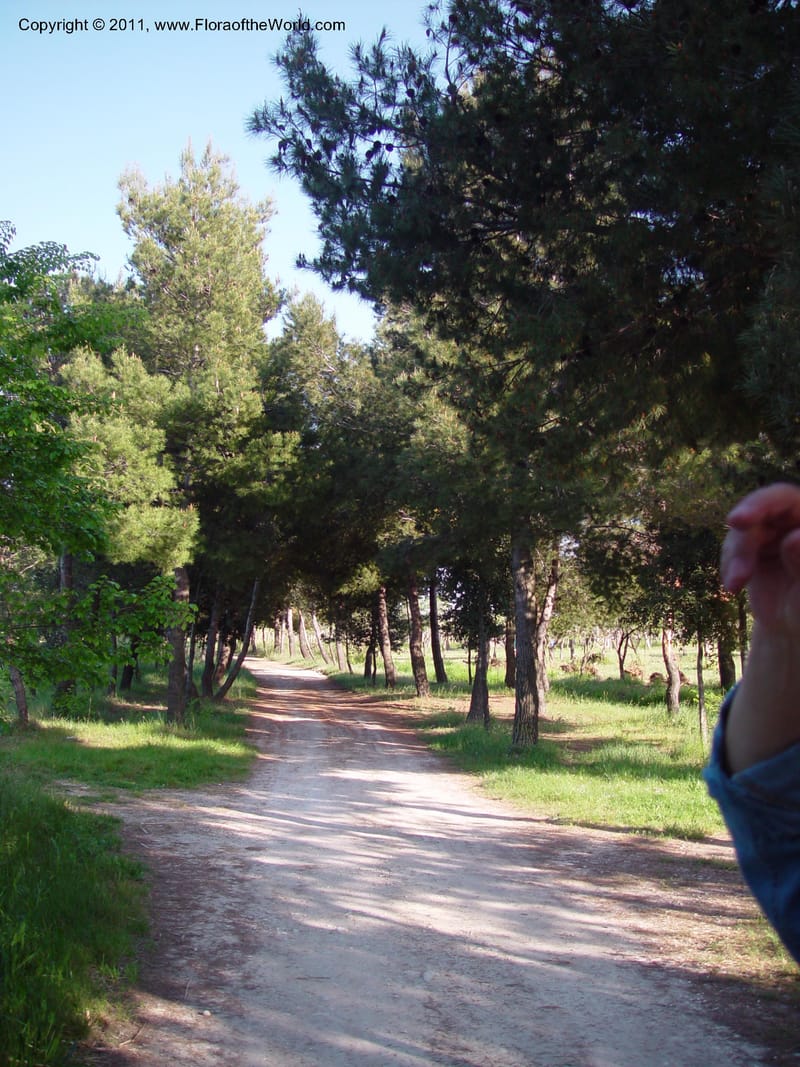
Dirt road through a stand of pine trees
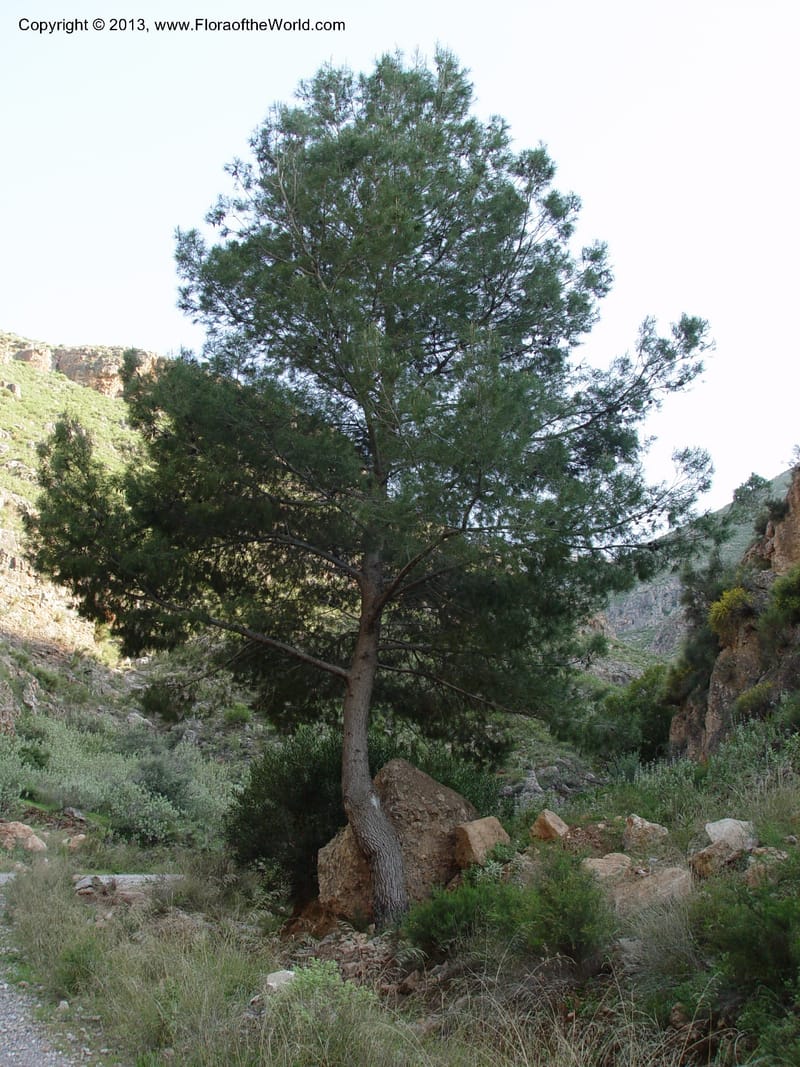
Pine tree growing beside large boulders on a slope
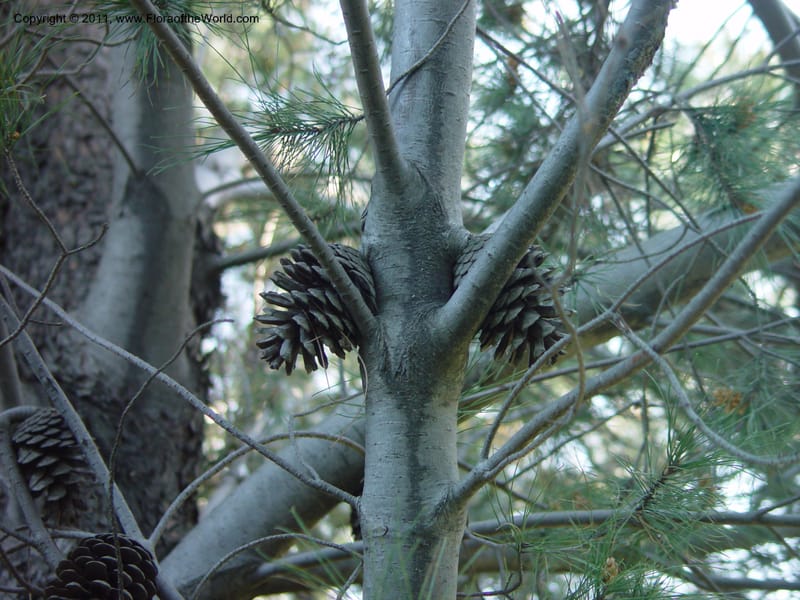
Mature seed cones clinging to a smooth grey pine trunk
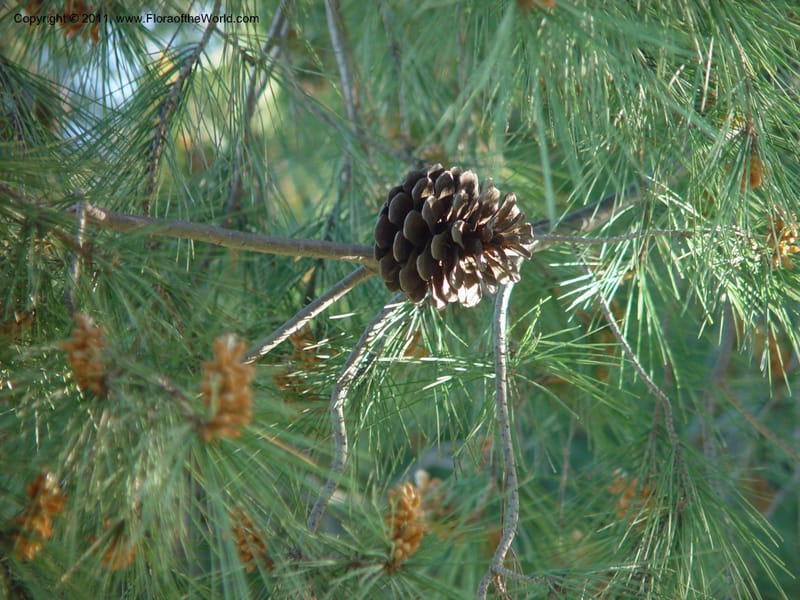
Mature seed cone on branch among needle foliage
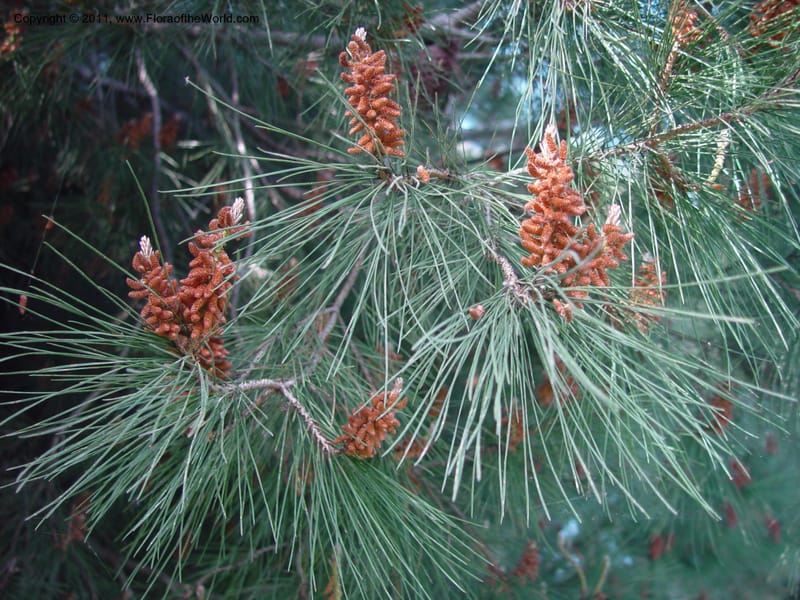
Pollen cones and needle clusters on pine branches
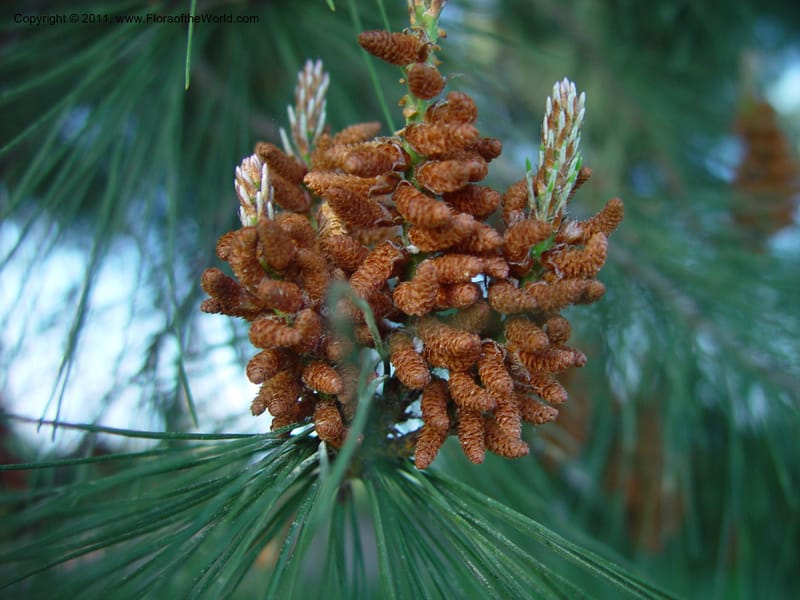
Cluster of male pollen cones among needle-like leaves
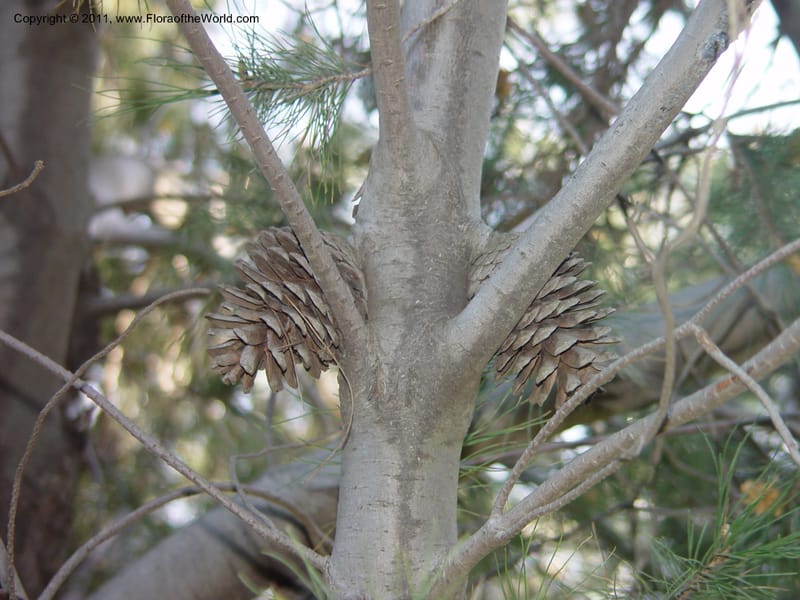
Persistent seed cones tucked into a branch fork
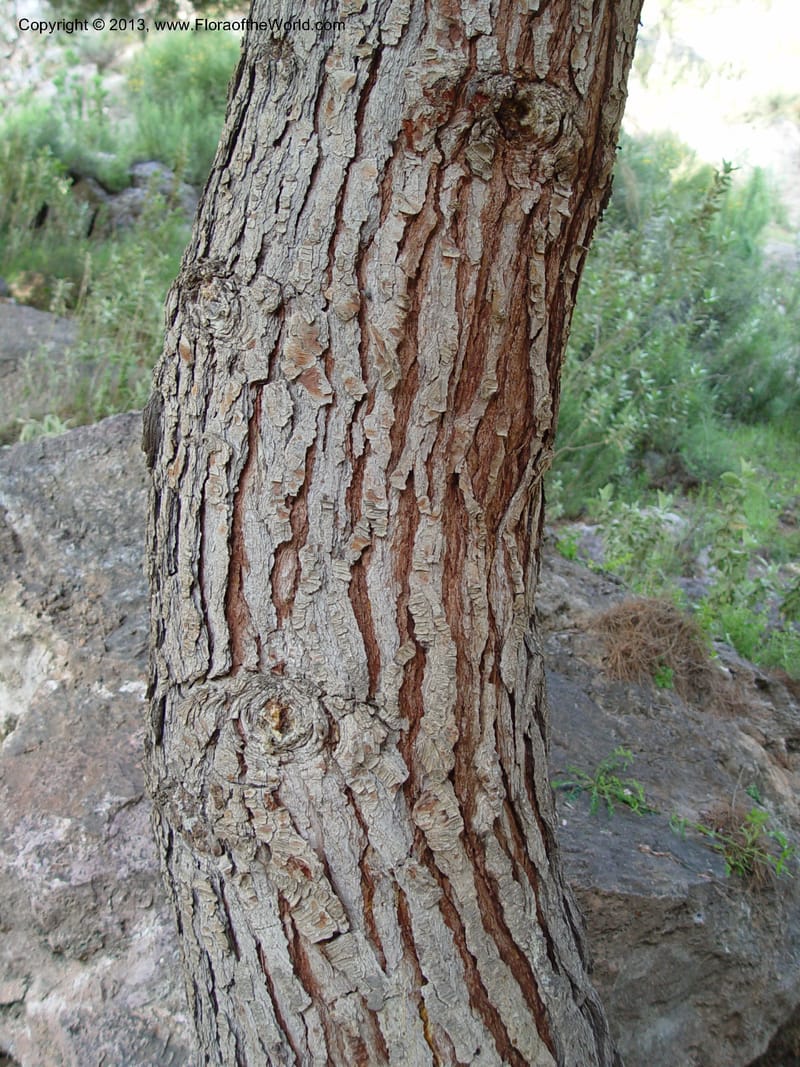
Deeply fissured bark on a curving tree trunk
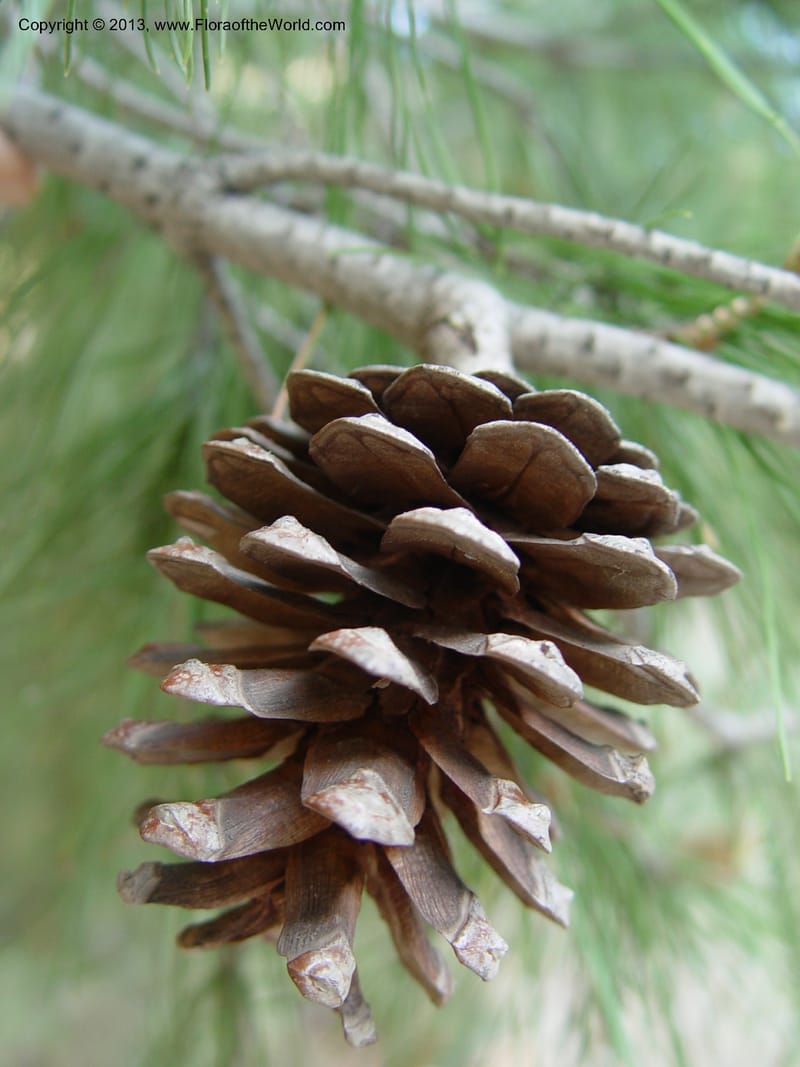
Mature seed cone hanging from a branch
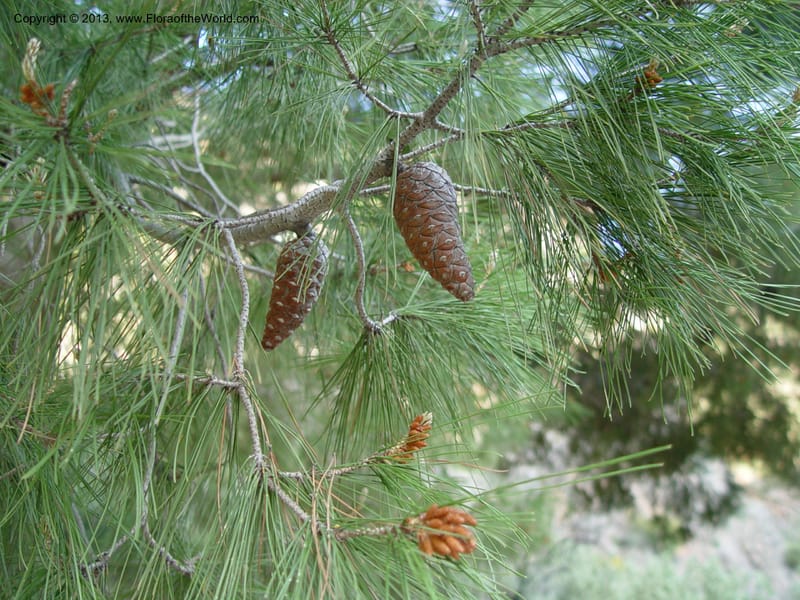
Foliage and seed cones hanging from a pine branch
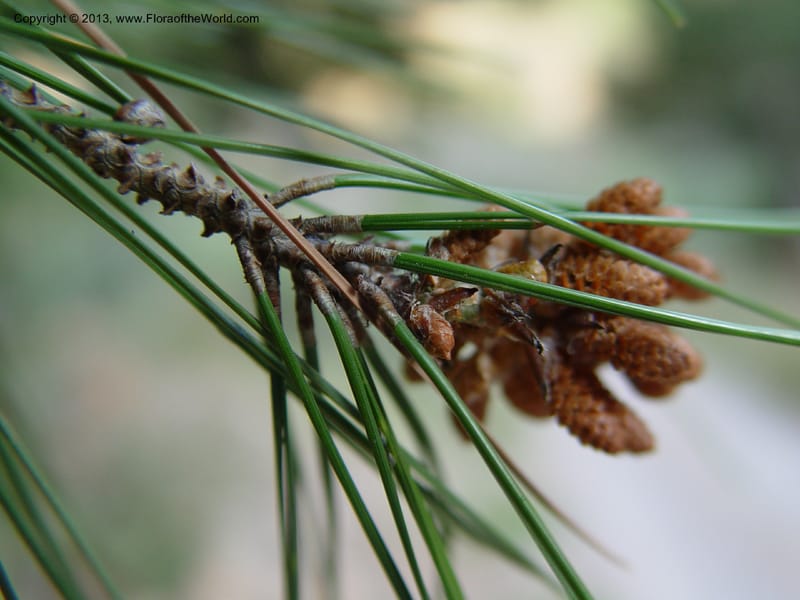
Pollen cones and needles on a twig tip
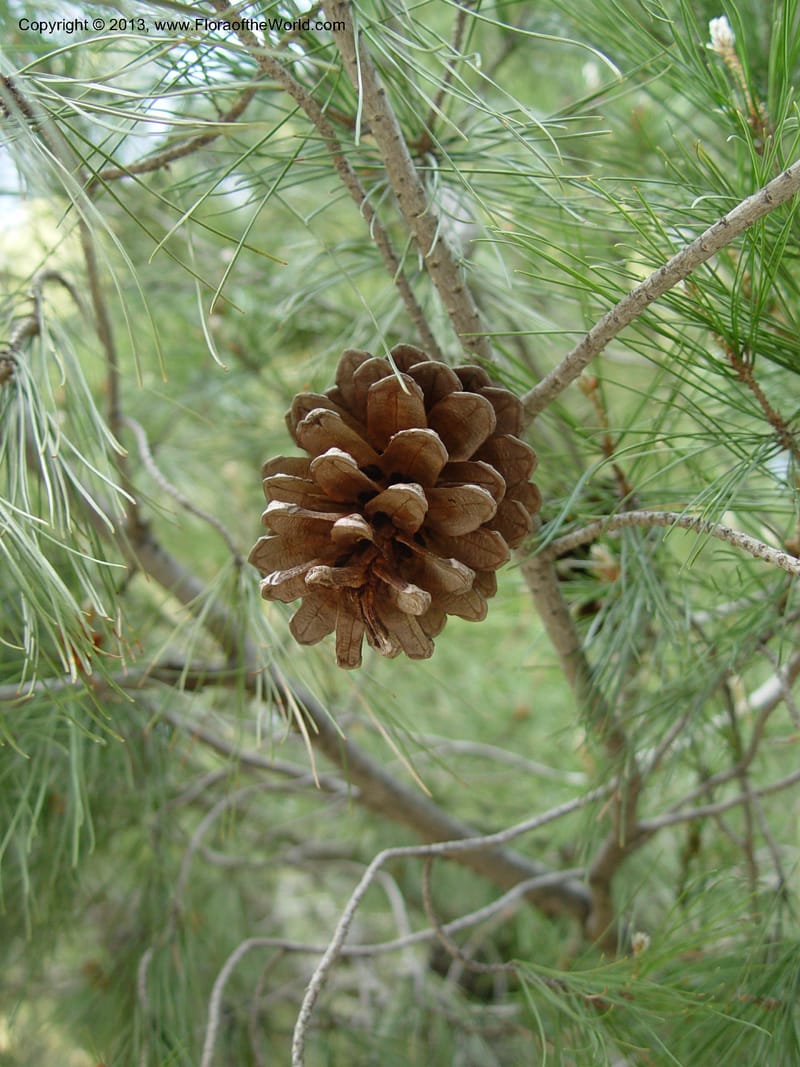
Open mature seed cone hanging among slender needle foliage
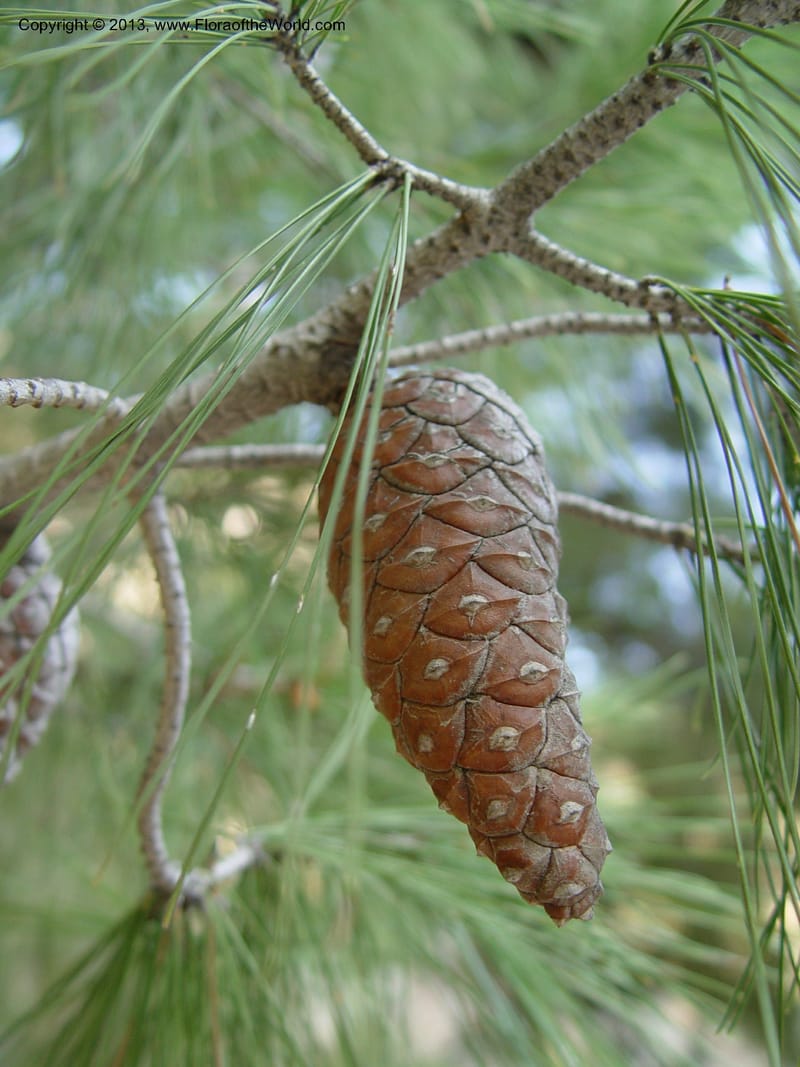
Pendent seed cone hanging from a leafy pine branch
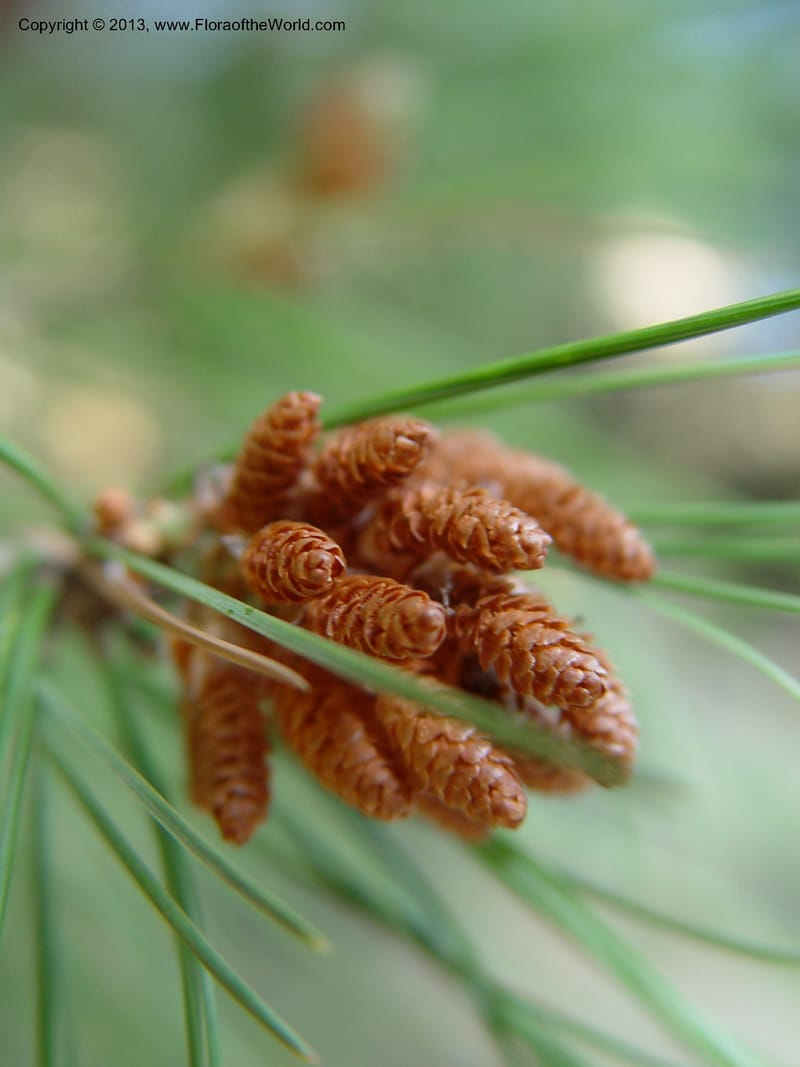
Cluster of young pollen cones among slender needles
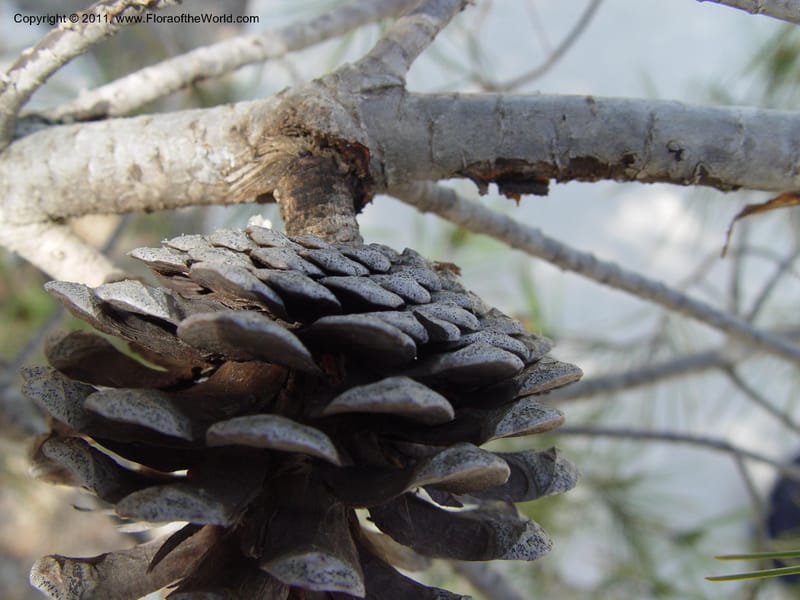
Mature seed cone attached to a bare branch
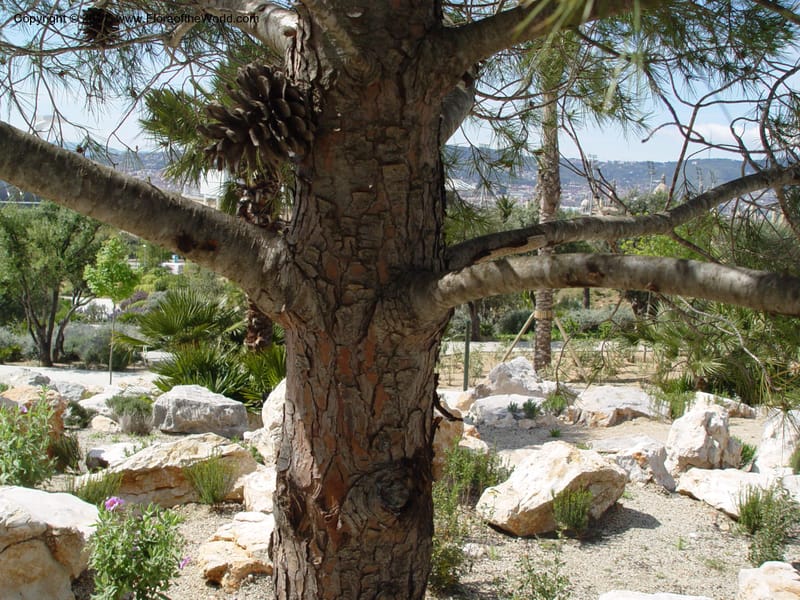
Trunk and lower branches of a pine with persistent cones
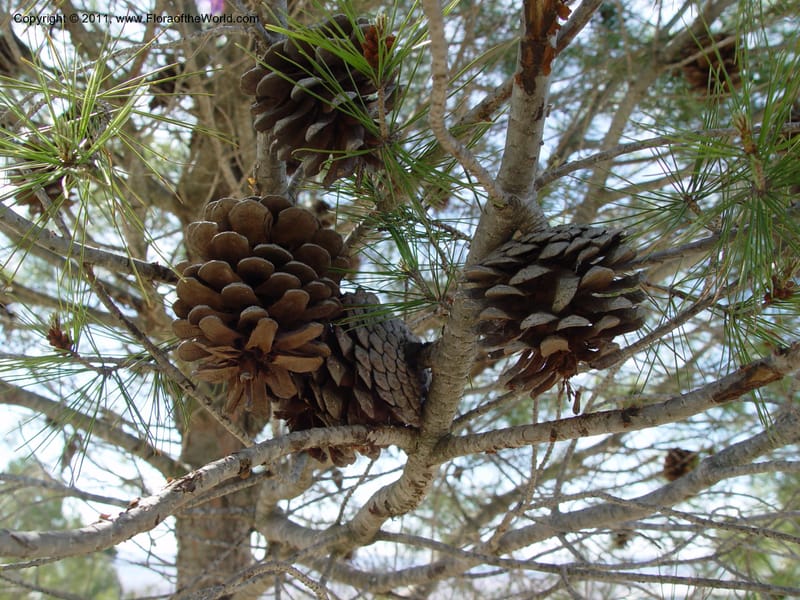
Mature seed cones on branch among needle-like leaves
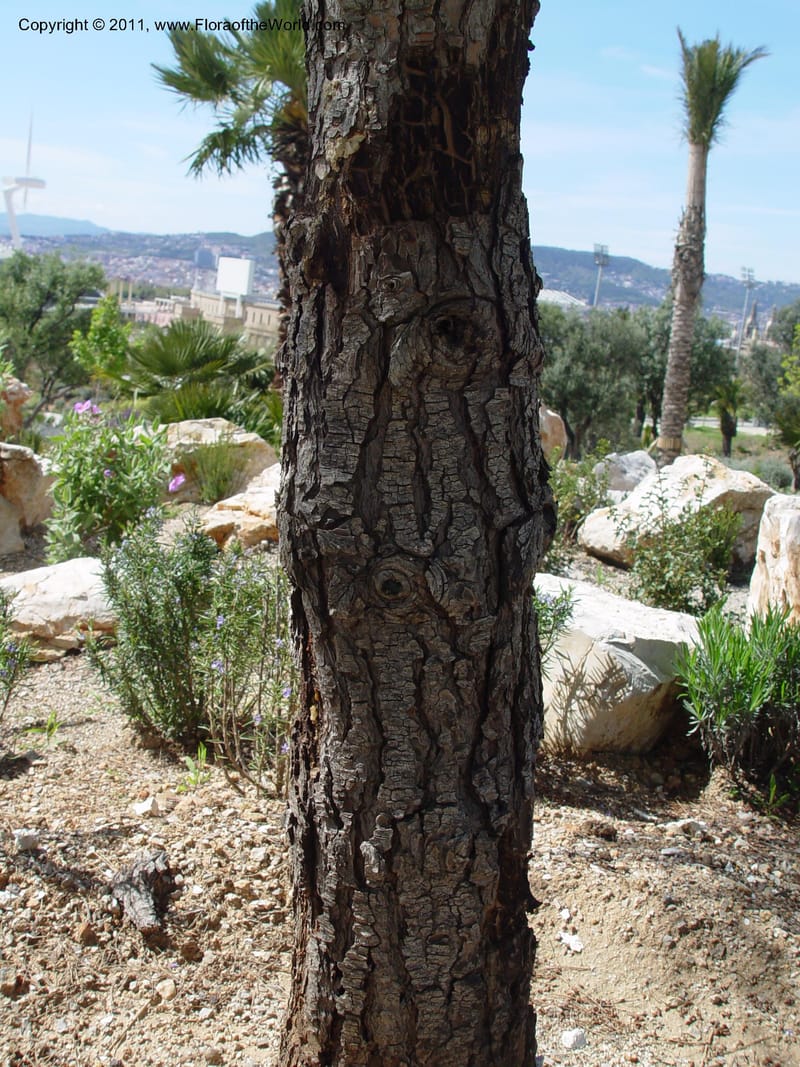
Deeply fissured grey-brown bark on an upright trunk
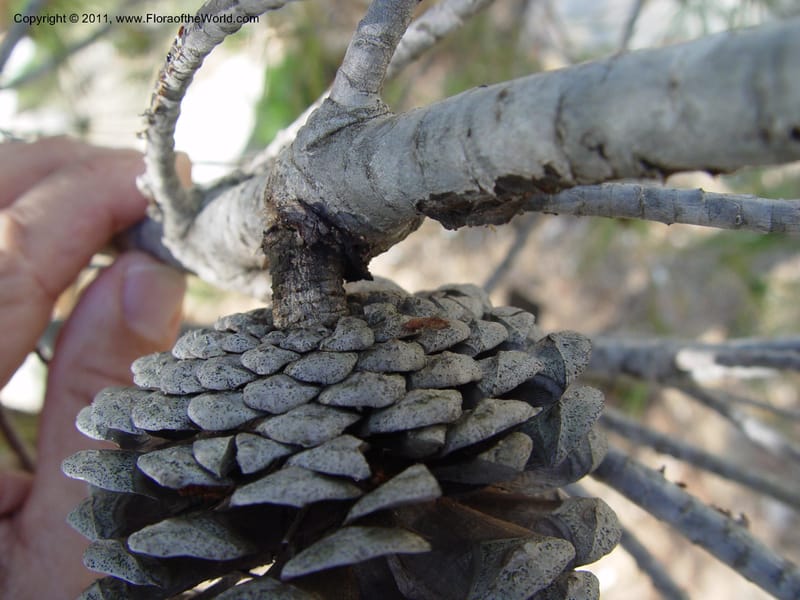
Matured seed cone attached to a woody branch
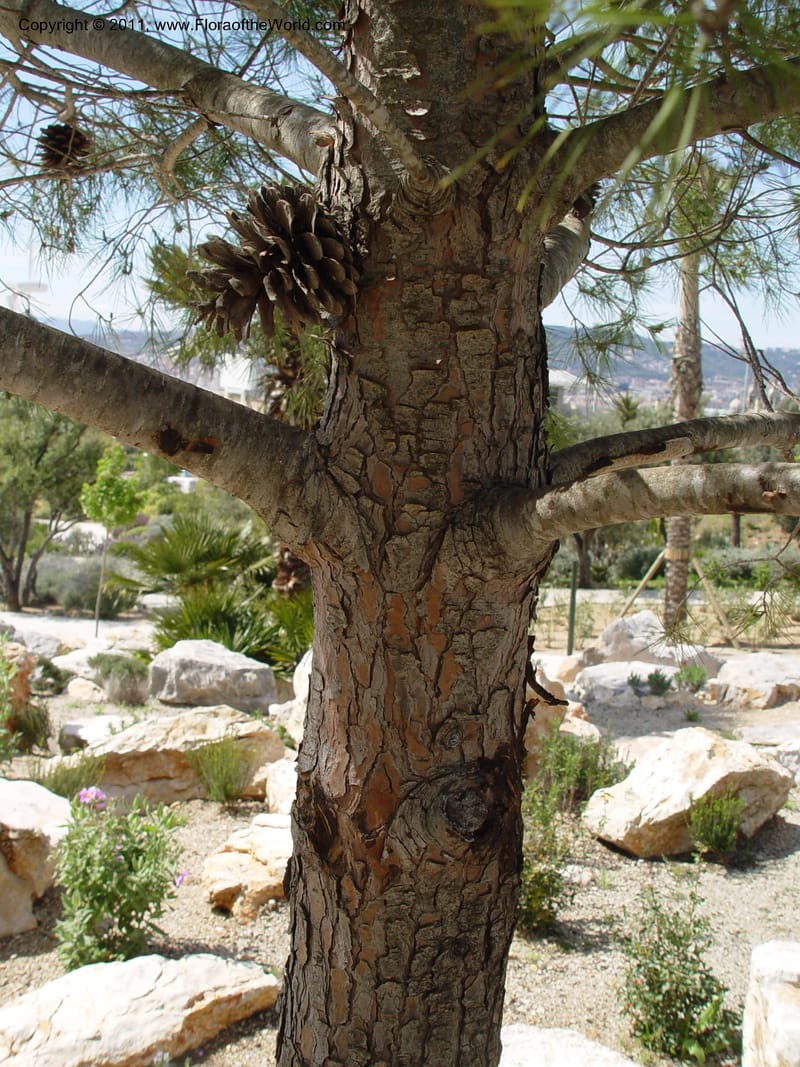
Bark and persistent cones on a pine trunk
Global range is not yet available in Plants of the World Online. Flora of the World documents 3 occurrences across 2 countries.
As seen in 2 occurrences, in Abruzzo, Italy, and Andalusia, Spain (plus 1 in botanic gardens): Trees occur along a dirt road in Abruzzo and beside boulders on a slope in Andalusia. Needles are slender, flexible, and green to dark green, arranged in fascicles or bundles along twigs. Woody seed cones are ovoid to conical and pale brown, dark brown, or reddish-brown, opening with spreading scales, while cylindrical pollen cones cluster densely around emerging shoot bases. Trunk bark is smooth and pale silvery-grey on younger wood, becoming rough, greyish-brown, and fissured into plates with age.
Seed cones woody, conical to ovoid, with scales closed to widely spreading. Pollen cones cylindrical, clustered densely at the base of new shoots.
Garden plants · not used
Location
Spain, Catalonia (Barcelona Botanic Garden)
Location Remarks
c/ Dr. Font i Quer, 2, Parc de Montjuïc, Barcelona
Collectors
No collectors specified
Location
Italy, Abruzzo, Chieti (Ortona)
42.336389, 14.416667
Location Remarks
Ortona commune, near Canadian Cemetery, just east of SS16, the main Adriatic coast highway
Collectors
No collectors specified
Location
Spain, Andalusia, Granada (Órgiva)
36.844722, -3.367222
Location Remarks
On A7209 about 5 km from junction with A348, south of Orgiva.
Collectors
No collectors specified
Kingdom
Plantae
Phylum
Tracheophyta
Class
Pinopsida
Order
Pinales
Family
Pinaceae
Genus
Pinus
Specific Epithet
halepensis
Authorship
Mill.
What is EDGE?
Evolutionary distinctiveness
Lower
ED 1.8
Part of a well-represented branch of the plant tree of life, with many close relatives.
Threat status
IUCN Red List
EDGE score
0.1
Global rank
#891 of 1,090
Top 1,000 globally
This lineage appears to have diverged from its closest living relatives roughly 2 million years ago — a long, lonely branch of the plant tree of life.
Source: Gymnosperms EDGE assessment →