
The Collection
Flora of the World has documented 19,640 occurrences across 3,839 collection events, supported by 242,344 digital images and a growing body of scientific publications.
Collection Events
3,839
Occurrences
19,640
Images
242,344
Type Specimens
3
Geographic Reach
Our collections span 52 countries across multiple continents, capturing plant diversity from tropical biodiversity hotspots to temperate regions. Click on any bar to explore sub-regions.
Countries
52
Locations
773
Geographic Distribution (Top 12)
Taxonomic Coverage
The collection covers 482 families, 4,520 genera, and 6,006 species. The treemap below shows the distribution across plant families. Click to drill down into genera and species.
Taxonomy Distribution (Top 15)
The Last of Their Kind
Some flowering plants have almost no close relatives left on Earth — the sole survivors of lineages that branched off long ago. Lose one and an entire limb of the tree of life goes with it. Our collection safeguards living material for 7 of the 100 most evolutionarily distinct and endangered flowering plants in the world — and 214 EDGE priority species in all.
EDGE stands for Evolutionarily Distinct & Globally Endangered — it ranks the world's flowering plants by how much irreplaceable evolutionary history they carry and how close they are to extinction.
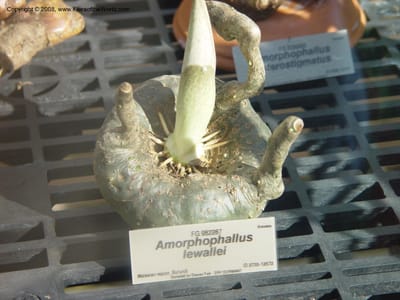
#2 most distinct & endangered flowering plant on Earth
Amorphophallus lewallei Malaisse & Bamps
51 million years of unique evolutionary history
Among the most evolutionarily isolated plants known — losing it erases an irreplaceable branch of the plant tree of life.
Explore this species →Of the world's 100 most irreplaceable
7
By global EDGE rank
EDGE priority species held
214
Distinct and globally threatened
In the global top 1,000
38
The world's highest priorities
Distinct, awaiting assessment
269
Not yet IUCN-assessed
Most irreplaceable plants in the collection
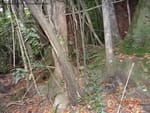
#11
Gomortega keule (Molina) Gunckel
Gomortegaceae
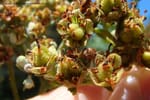
#15
Lyonothamnus floribundus A.Gray
Rosaceae
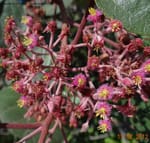
#24
Petenaea cordata Lundell
Petenaeaceae
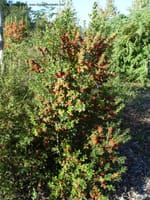
#39
Ilex dimorphophylla Koidz.
Aquifoliaceae
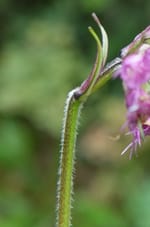
#70
Nardostachys jatamansi (D.Don) DC.
Caprifoliaceae
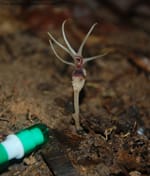
#76
Afrothismia korupensis Sainge & T.Franke
Burmanniaceae
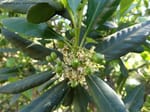
#110
Pitavia punctata (Ruiz & Pav.) Molina
Rutaceae
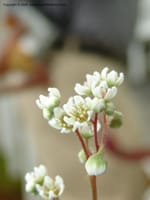
#118
Cephalotus follicularis Labill.
Cephalotaceae
Distinctiveness vs. threat
Each dot is one of the 214 EDGE priority species in the collection — the further right and higher up, the more irreplaceable.
IUCN assessed
Model-predicted
A further 269 species we hold are “EDGE Research” species — evolutionarily distinct but not yet formally assessed, so their threat is predicted rather than confirmed. Every specimen we voucher helps science decide what to protect next.
Ancient Survivors
Conifers, cycads, and ginkgo are living relics — lineages that took root before the first flower ever opened and outlasted the dinosaurs. Each one we lose severs a root that reaches back hundreds of millions of years. Our collection safeguards living material for 18 of the 100 most evolutionarily distinct and endangered gymnosperms in the world — and 40 EDGE priority species in all.
EDGE stands for Evolutionarily Distinct & Globally Endangered — it ranks the world's gymnosperms by how much irreplaceable evolutionary history they carry and how close they are to extinction.
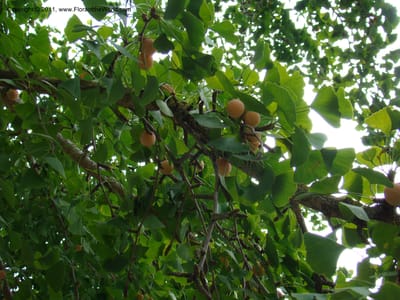
#1 most distinct & endangered gymnosperm on Earth
Ginkgo biloba L.
315 million years of unique evolutionary history
Among the most evolutionarily isolated plants known — losing it erases an irreplaceable branch of the plant tree of life.
Explore this species →Of the world's 100 most irreplaceable
18
By global EDGE rank
EDGE priority species held
40
Distinct and globally threatened
In the global top 1,000
138
The world's highest priorities
Most irreplaceable plants in the collection
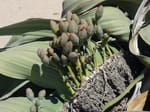
#4
Welwitschia mirabilis Hook.f.
Welwitschiaceae
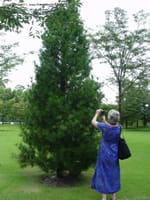
#7
Sciadopitys verticillata (Thunb.) Siebold & Zucc.
Sciadopityaceae
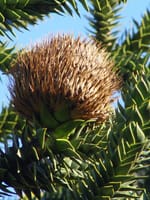
#8
Araucaria araucana (Molina) K.Koch
Araucariaceae
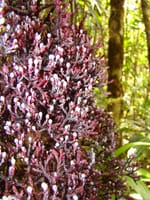
#9
Parasitaxus usta (Vieill.) de Laub.
Podocarpaceae
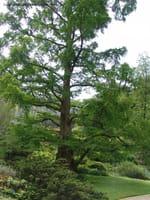
#11
Metasequoia glyptostroboides H.H.Hu & W.C.Cheng
Cupressaceae
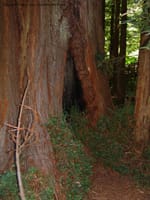
#13
Sequoia sempervirens (D.Don) Endl.
Cupressaceae
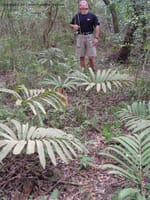
#22
Stangeria eriopus (Kunze) Baill.
Zamiaceae
#28
Dioon spinulosum Dyer ex Eichler
Zamiaceae
Research Community
Behind every specimen is a network of 941 people and 91 institutions who collect, identify, and document plant diversity. Their work has produced 139 publications advancing our understanding of the world's flora.
Anchored in the World's Herbaria
Flora of the World occurrences are anchored to physical specimens held in 46 herbaria across the globe — from Missouri Botanical Garden and the Paris MNHN to herbaria across Ecuador, Madagascar, and the South Pacific. Together they hold 2,424 specimens vouchering field observations from across our network.