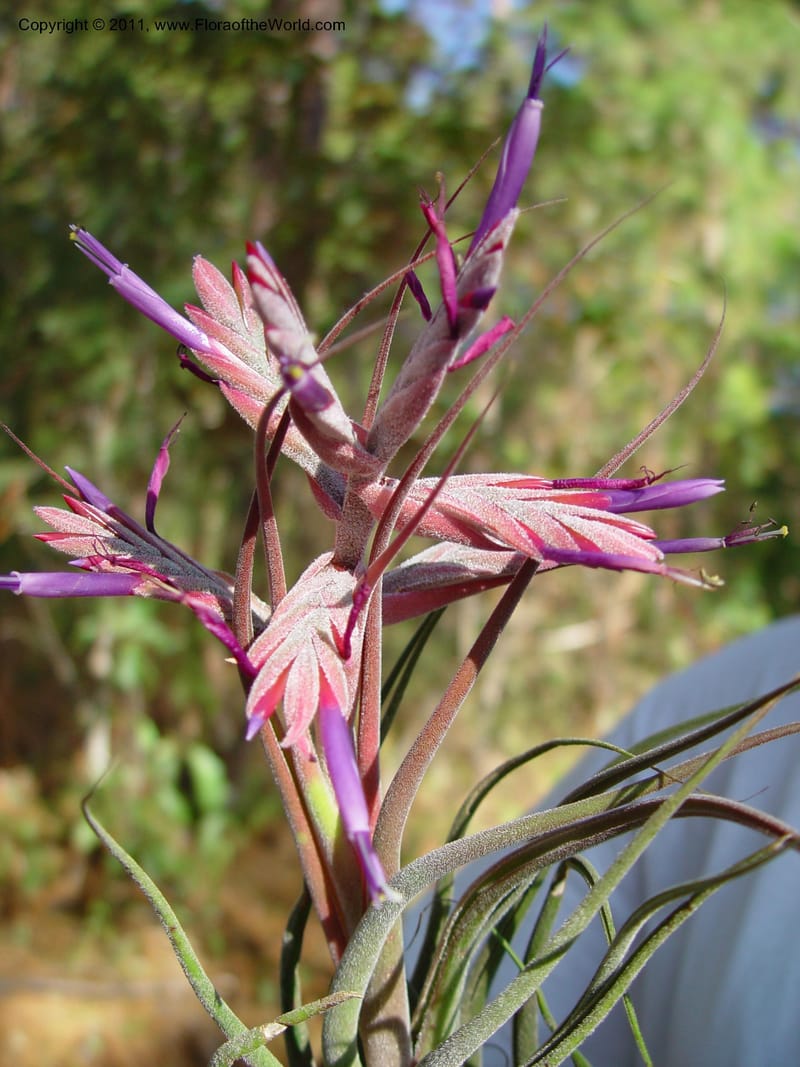
Tillandsia medusae cf, Perez-Farrera2910--MX. Chiapas. Carr. 195 ca 3 km s of Pueblo Nuevo. 19 Mch 03. 078.jpg
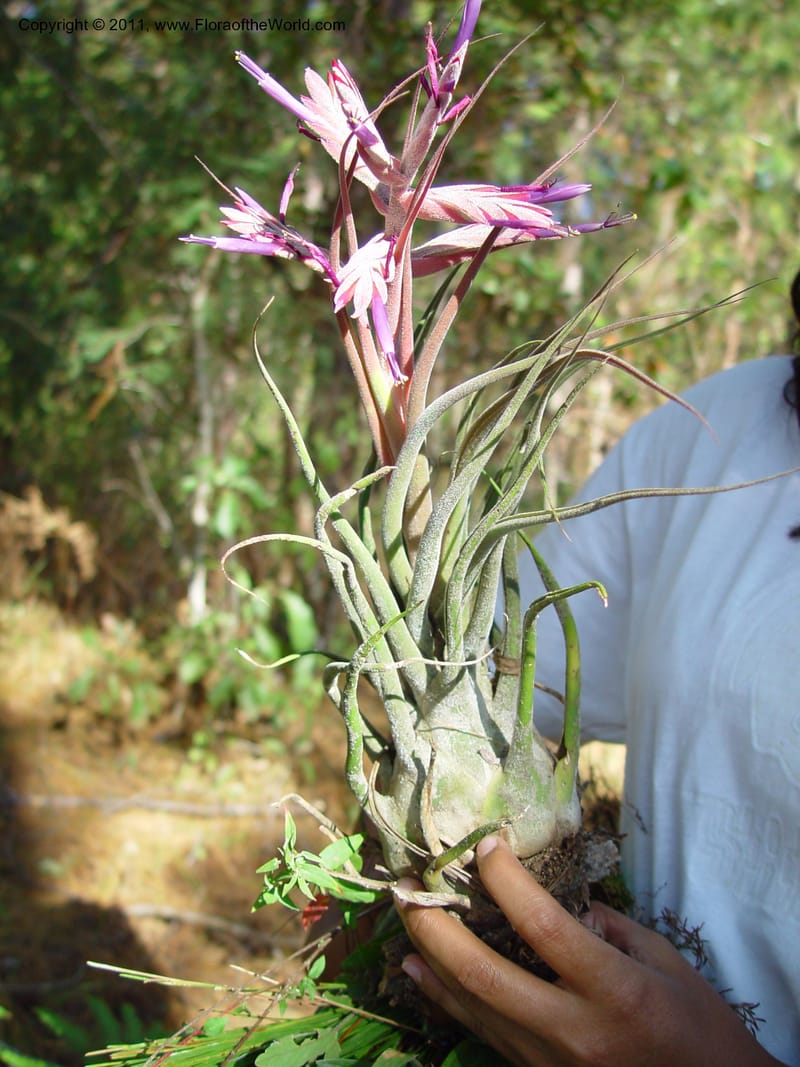
Tillandsia medusae cf, Perez-Farrera2910--MX. Chiapas. Carr. 195 ca 3 km s of Pueblo Nuevo. 19 Mch 03. 061.jpg
Native to Costa Rica, El Salvador, Guatemala, Honduras, Mexico Central, Mexico Gulf, Mexico Northeast, Mexico Northwest, Mexico Southeast, Mexico Southwest, Nicaragua, Panamá (source: POWO). Flora of the World documents 1 occurrence across 1 country.
Location
Mexico, Chiapas (Rayón)
17.209056, -92.966472
Location Remarks
Mirador La Selva Negra. Por Cta. Rincon Chamula (Cta 195), c. 2.2 km noroeste de Rincon Chamula. 1898 m elev.
Collectors
Kingdom
Plantae
Phylum
Tracheophyta
Class
Liliopsida
Order
Poales
Family
Bromeliaceae
Genus
Tillandsia
Specific Epithet
caput-medusae
Authorship
É.Morren
What is EDGE?
Evolutionary distinctiveness
Lower
ED 0.5
Part of a well-represented branch of the plant tree of life, with many close relatives.
Threat status
Modelled estimate
EDGE score
0.0
Global rank
#298,541 of 335,497
Top 89%
Extinction probability
11%
