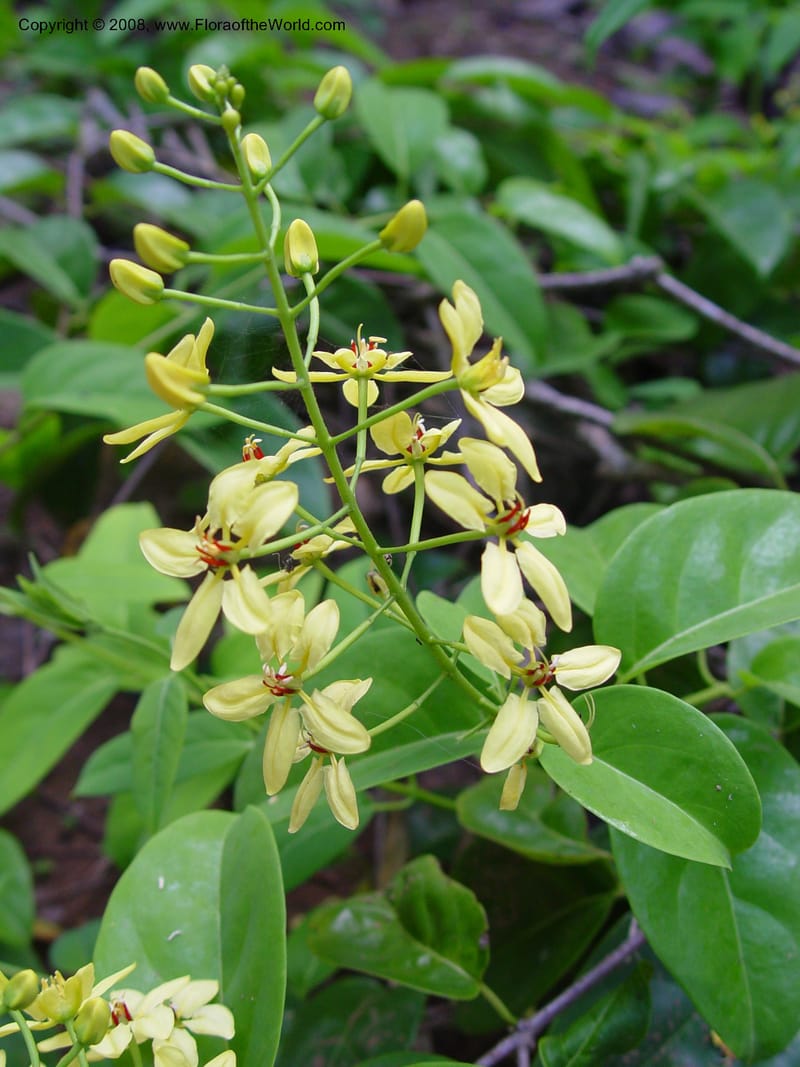
Tristellateia australasiae--Ghana. Aburi Botanic Garden. 10 Dec 03. 162.jpg
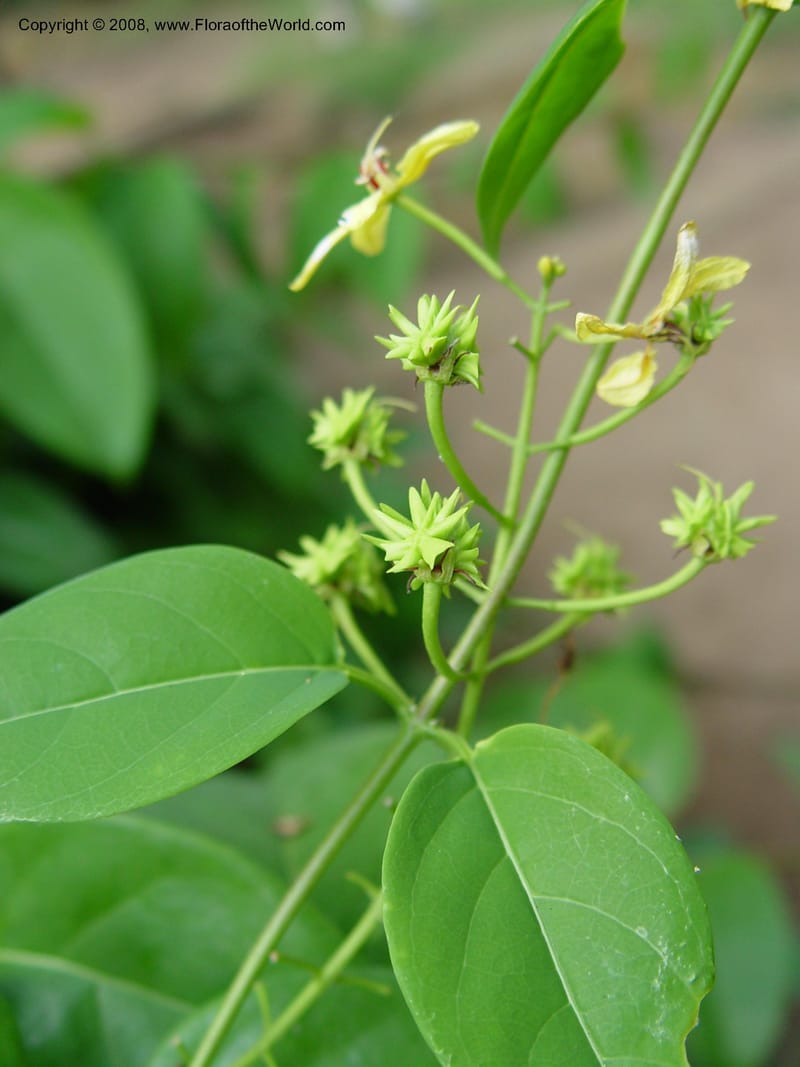
Tristellateia australasiae--Ghana. Aburi Botanic Garden. 10 Dec 03. 163.jpg
Native to Bismarck Archipelago, Borneo, Cambodia, Caroline Is., Comoros, Jawa, Lesser Sunda Is., Malaya, Maluku, Marianas, Myanmar, Nansei-shoto, New Caledonia, New Guinea, Philippines, Queensland, Sulawesi, Sumatera, Taiwan, Thailand, Vanuatu, Vietnam; introduced into Society Is. (source: POWO). Flora of the World documents 1 occurrence across 1 country.
Location
Ghana, Eastern, Akuapim (Aburi, Aburi Botanic Gardens)
5.8512, -0.17296
Location Remarks
Aburi village, 30 km north of Accra
Collectors
Kingdom
Plantae
Phylum
Tracheophyta
Class
Magnoliopsida
Order
Malpighiales
Family
Malpighiaceae
Genus
Tristellateia
Specific Epithet
australasiae
Authorship
A.Rich.
What is EDGE?
Evolutionary distinctiveness
Lower
ED 2.3
Part of a well-represented branch of the plant tree of life, with many close relatives.
Threat status
Modelled estimate
EDGE score
0.2
Global rank
#201,689 of 335,497
Top 61%
Extinction probability
10%
